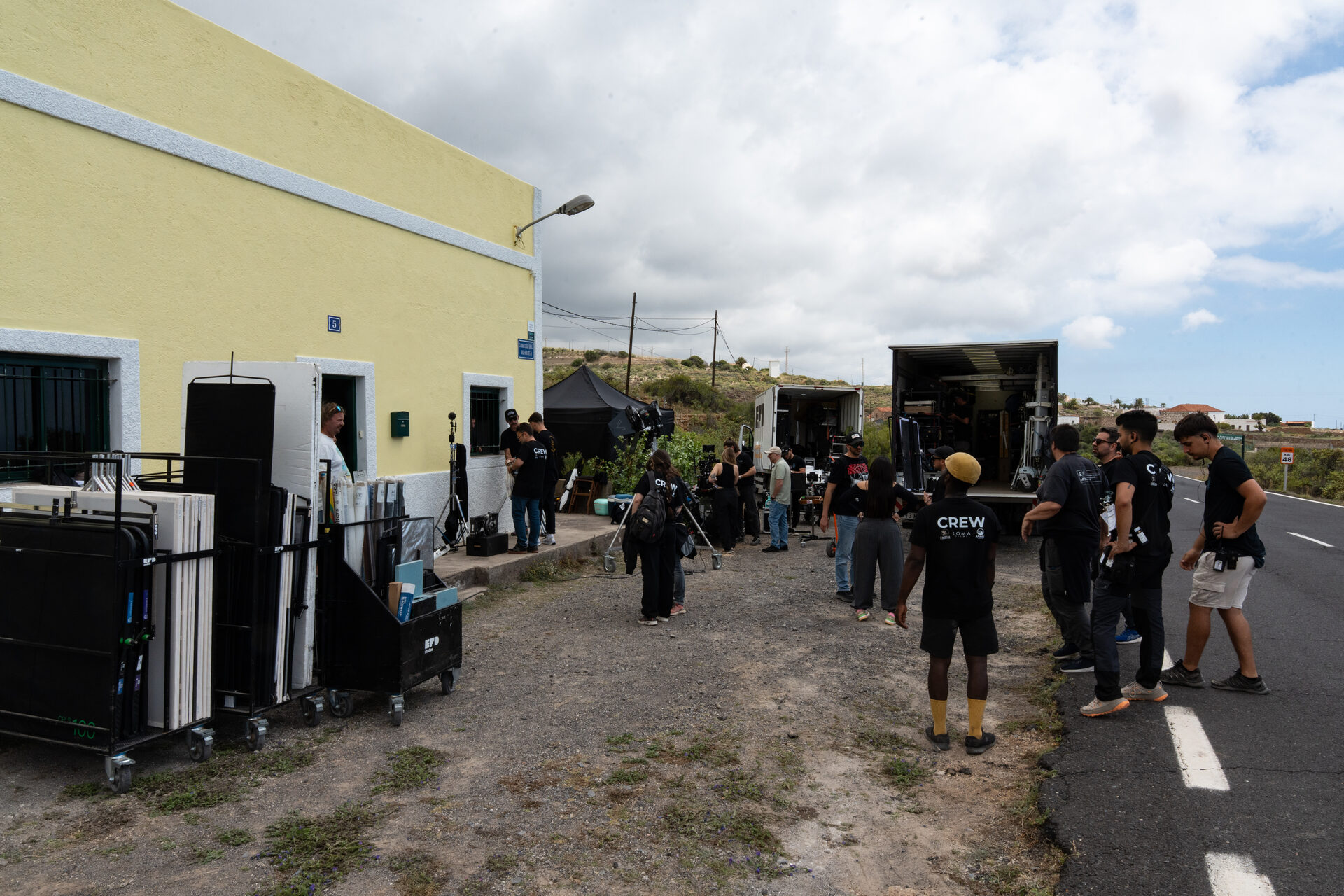
Spain has spent the last decade making itself impossible to ignore for international producers. Understanding how the framework works — and where it works hardest — can change a budget more than any other single decision.
When an international production looks at Spain, it is really looking at two systems at once. There is the national framework that applies across mainland Spain, and there is the enhanced regime that applies in the Canary Islands. Both are designed to attract foreign spend; one simply goes further than the other. Knowing the difference is the first job of any producer building a budget for a Spanish shoot.
The national framework
Mainland Spain offers a tax rebate for international productions that carry out work in the country through a local production services company. The mechanism is a deduction on qualifying Spanish expenditure — crew, services, talent, locations and the rest — subject to a minimum spend and an overall cap per production. For many years this put Spain firmly in the same conversation as other major European rebate territories, and it is the reason large international shoots have become a regular fixture across the country.
Where the Canary Islands change the math
The Canary Islands sit inside Spain and the European Union, but operate under their own Economic and Fiscal Regime (REF). That regime allows the islands to lift the rebate roughly twenty percentage points above the mainland rate. In headline terms:
- 54% rebate on the first €1 million of qualifying spend.
- 45% on qualifying spend above that threshold.
- Up to €36 million maximum deduction per feature film.
+20 points
That gap — twenty points over the mainland — is not a rounding error. On a production of any real scale, it is the difference between a shoot that pencils out and one that doesn't.
The mainland gets you a competitive rebate. The islands get you the most competitive one in Europe.
The structural advantages
Beyond the rebate itself, two additional mechanisms make the Canary Islands efficient as a base, not just as a location:
- ZEC (Special Canary Zone) — a company established within this zone can access a reduced corporate tax rate of 4%, well below the standard Spanish rate.
- IGIC at 0% on production services — the local indirect tax replaces mainland VAT, and production services are generally exempt, against the 21% you would face elsewhere in Spain.

How a production actually accesses it
An international production almost always accesses these incentives through a local production services company that incurs the qualifying spend, manages the paperwork and meets the regulatory conditions. This is the core of what we do at LOMA FILMS: we sit on the ground in Tenerife, build the rebate into the budget from day one, and handle the line production so the incentive is realised rather than just promised.
A word on accuracy
Tax legislation is living law. Rates, caps, minimum-spend thresholds and qualifying-expense definitions are periodically revised, and the optimal structure depends on the specifics of each production. The figures above reflect the framework as we apply it for the productions we service; for any project, we confirm the current terms with our advisors before they go into a budget. Treat this as orientation, not a substitute for tailored advice.
If you want to know what your specific production would qualify for, the fastest route is a direct conversation. Send us the broad strokes — budget range, shoot length, the kind of project — and we'll come back with a realistic picture of what the Canary Islands could mean for it.